
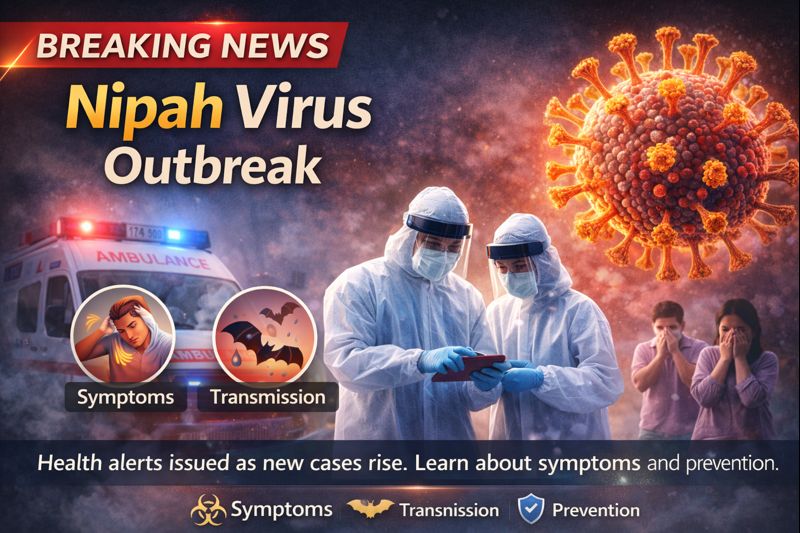
Introduction The recent Nipah virus outbreak has once again raised serious global health concerns. Known for its high fatality rate and rapid spread the Nipah virus is one of the most dangerous zoonotic diseases in the world. Whenever an outbreak is reported, fear and uncertainty quickly follow especially because there is currently no specific cure or widely available vaccine
This article explains everything you need to know about the Nipah virus outbreak, including its causes, symptoms, transmission, prevention methods, and why health authorities treat it as a top-priority threat
What Is the Nipah Virus?
The Nipah virus (NiV) is a highly infectious virus that spreads from animals to humans and can also transmit between humans. It was first identified in 1999 during an outbreak in Malaysia and has since caused multiple outbreaks in South and Southeast Asia
Why Is the Nipah Virus So Dangerous?
- High mortality rate (40%–75%)
- No confirmed antiviral treatment
- Can cause severe brain inflammation (encephalitis)
- Spreads through close contact and contaminated food
Nipah Virus Outbreak: Current Situation
A Nipah virus outbreak typically triggers emergency responses due to its potential to spread rapidly. Governments and health agencies closely monitor suspected cases, isolate patients, and trace contacts to prevent wider transmission.
Outbreaks are often localized but dangerous especially in densely populated areas where healthcare systems may come under pressure
How Does the Nipah Virus Spread?
1. Animal to Human Transmission
Fruit bats, also known as flying foxes, are the natural carriers of the Nipah virus. Humans can become infected by:
- Eating fruits contaminated by bat saliva or urine
- Drinking raw date palm sap exposed to bats
2. Human to Human Transmission
The Nipah virus outbreak becomes more dangerous when human-to-human transmission occurs This can happen through
- Direct contact with bodily fluids
- Respiratory droplets
- Close caregiving without protective equipment
3. Hospital-Based Transmission
Healthcare workers are at higher risk if infection control measures are not strictly followed
Symptoms of Nipah Virus Infection
Early Symptoms
- High fever
- Headache
- Muscle pain
- Vomiting
- Sore throat
Severe Symptoms
- Dizziness
- Confusion and disorientation
- Seizures
- Acute respiratory distress
- Brain inflammation encephalitis
In severe cases, the infection can progress rapidly, leading to coma or death within days
Who Is Most at Risk During a Nipah Virus Outbreak?
High-Risk Groups
- Healthcare workers
- Family members of infected patients
- People consuming raw or unwashed fruits
- Residents of outbreak-affected regions
People with weaker immune systems may also face a higher risk of severe complications
How Is the Nipah Virus Diagnosed?
Early diagnosis during a Nipah virus outbreak is critical. Doctors use:
- RT-PCR tests
- Blood and throat swab samples
- Imaging scans to detect brain inflammation
Because symptoms can resemble other viral infections, laboratory confirmation is essential
Is There a Treatment for Nipah Virus?
Currently, there is no specific cure for Nipah virus infection Treatment mainly focuses on
- Supportive care
- Managing symptoms
- Intensive monitoring in severe cases
Experimental treatments and vaccines are under research, but prevention remains the most effective defense
Prevention Tips During a Nipah Virus Outbreak
Personal Safety Measures
- Avoid eating partially eaten or fallen fruits
- Wash fruits thoroughly before consumption
- Avoid raw date palm sap
- Practice regular hand hygiene
Community Level Prevention
- Isolate infected individuals immediately
- Use protective gear when caring for patients
- Educate communities about transmission risks
Healthcare Safety
- Strict infection control protocols
- Use of PPE by medical staff
- Proper disposal of medical waste
Role of Government and Health Authorities
During a Nipah virus outbreak, health authorities play a vital role by:
- Conducting contact tracing
- Issuing public health advisories
- Restricting movement in affected zones
- Raising awareness through media campaigns
Quick and transparent communication helps prevent panic and misinformation
Why the Nipah Virus Outbreak Is a Global Concern
Although outbreaks are often localized, the Nipah virus has pandemic potential due to:
- High fatality rate
- Ability to mutate
- Lack of vaccine
- International travel and urbanization
This is why the World Health Organization (WHO) lists Nipah virus as a priority pathogen
Frequently Asked Questions (FAQs)
Is the Nipah virus airborne?
No it mainly spreads through close contact and bodily fluids, not through long-distance airborne transmission.
Can Nipah virus be cured?
There is no confirmed cure yet. Treatment focuses on supportive medical care.
Can Nipah virus cause long-term effects?
Yes, survivors may experience long-term neurological problems.
Conclusion
The Nipah virus outbreak is a serious public health threat that demands awareness, caution, and collective responsibility. While the virus is rare, its impact can be devastating if preventive measures are ignored. Staying informed, following safety guidelines, and trusting verified health sources are the best ways to protect yourself and your community.
Early action saves lives and awareness is the first step
Nipah Virus Outbreak: What You Need to Know About the Deadly Virus
Nipah Virus Outbreak: Causes, Symptoms, and Prevention Measures
Pingback: nipah virus outbreak australia