
Sweep accounts are becoming increasingly popular in both personal and business finance. The idea is simple: instead of letting money sit unused in a basic checking or brokerage account, a sweep account automatically moves excess funds into short-term investment vehicles that can earn higher returns. When you need the money, it moves back automatically.
This allows individuals and businesses to keep their cash accessible while still earning yield on idle balances.
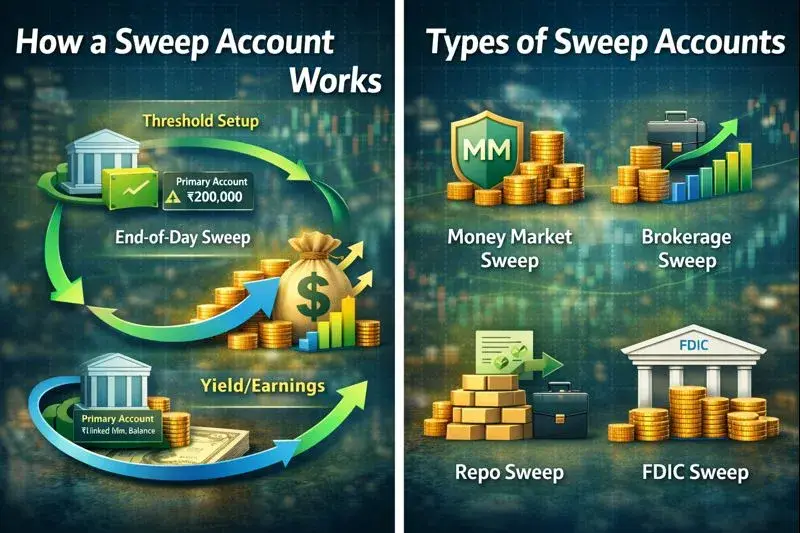
How a Sweep Account Works
A sweep account operates through an automated daily process:
1. Threshold Setting:
You set a minimum balance for your main account. Anything above that level can be swept.
2. End-of-Day Sweep:
At the end of the business day, funds exceeding the threshold move into a linked investment option such as a money market fund or short-term debt instrument.
3. Yield/Earnings:
The swept funds earn interest or yield while they are invested.
4. Automatic Reverse Sweep:
If your primary account balance drops due to payments, payroll, or withdrawals, funds are transferred back automatically.
This cycle eliminates manual transfers and makes cash management more efficient.

Types of Sweep Accounts
Sweep account options vary depending on the institution and user needs:
- Money Market Sweep
- Brokerage Sweep
- Repo (Repurchase Agreement) Sweep
- FDIC-Insured Sweep Options
Key Benefits
✔ Optimizes Idle Cash
Instead of earning almost nothing in a standard checking account, funds generate income overnight.
✔ Automation Saves Time
Businesses avoid manual treasury work and reduce human error.
✔ Liquidity Is Maintained
Funds are available for daily spending without sacrificing returns.
✔ Potential for Extended Insurance Coverage
FDIC sweep structures allow funds to be distributed across multiple partner banks to increase coverage limits.
✔ Ideal for Working Capital Management
Companies can improve liquidity and strengthen cash cycles.
Who Uses Sweep Accounts?
- Businesses: For payroll, vendor payments, and treasury operations.
- Investors: To avoid idle cash sitting uninvested in brokerage accounts.
- Individuals: To generate yield on cash they don’t immediately spend.
Should You Consider One?
Sweep accounts make sense if you:
- Maintain high balances in checking
- Manage recurring business expenses
- Want automated yield without riskier investing
- Need liquidity plus efficiency
Security & Regulation
Bank sweep accounts may benefit from FDIC coverage, while brokerage sweeps often fall under SIPC protections. Instruments such as money market funds and repurchase agreements vary in risk, so understanding the product type matters.
What Are Sweep Accounts? A Practical Guide for Smart Cash Management